LUMIX DMW-DMS1 – Is it really a Shotgun Microphone?
Panasonic LUMIX DMW-DMS1 On-Camera Microphone Review: A Niche Powerhouse for Ambient Audio
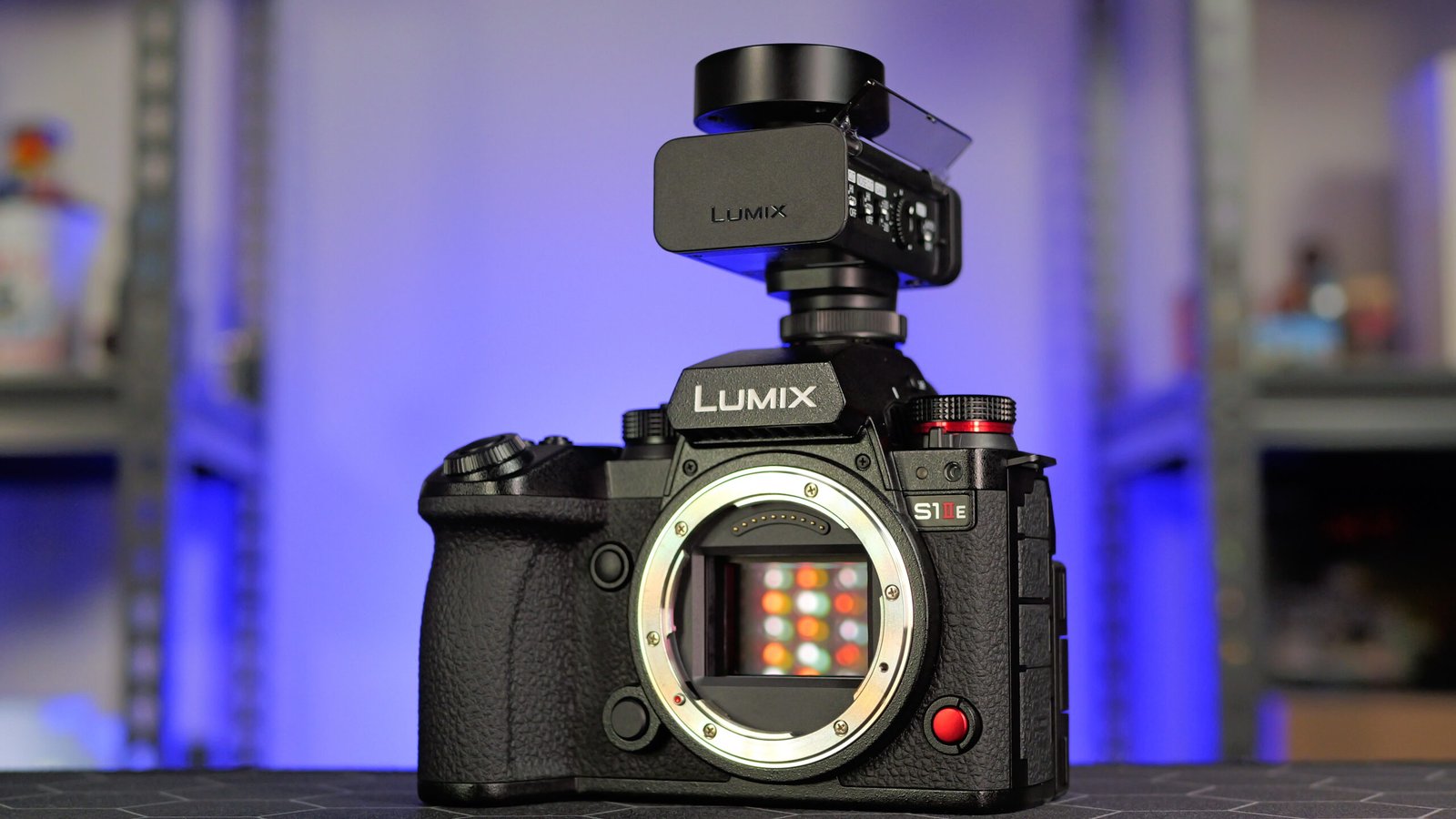
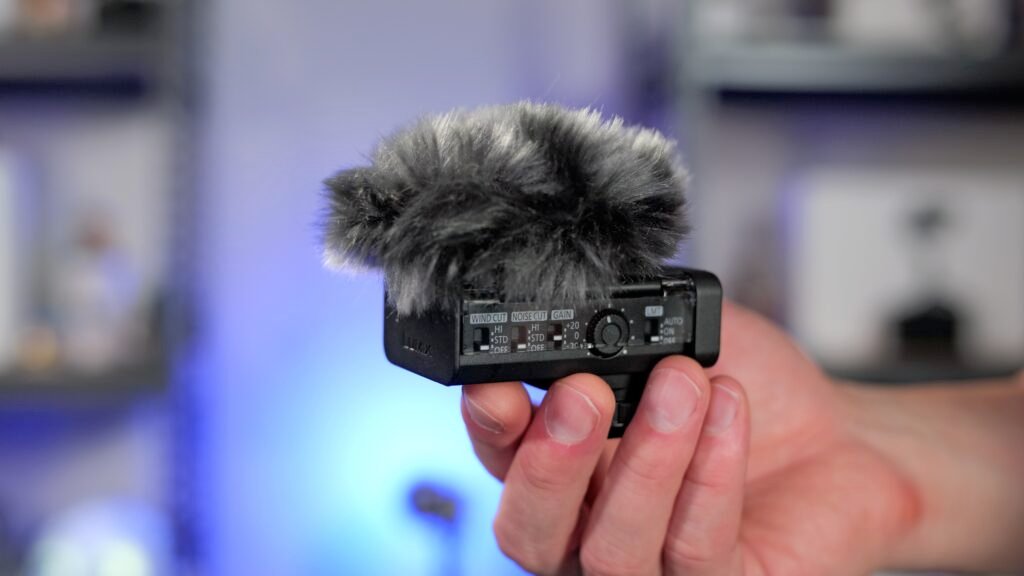
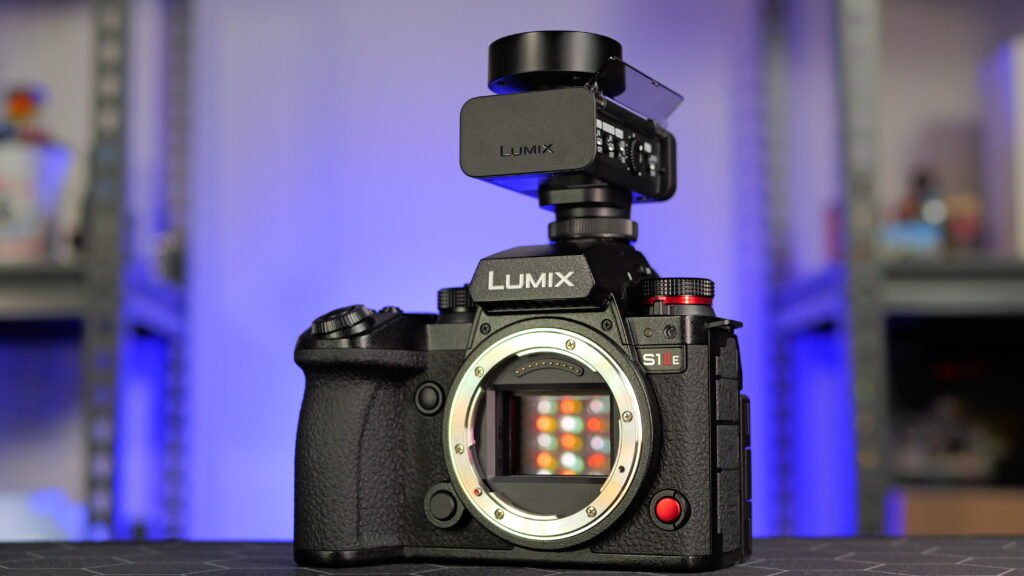
I’m Shane, and in this review we’re taking a close look at the new LUMIX DMW-DMS1 on-camera “Shotgun Mic”. I put “shotgun” in quotes because this looks nothing like a traditional shotgun mic—and you can see below what the this new mic looks like. The DMS1 can record in 32-bit float audio when connected to compatible cameras. More on this shortly.
Watch my full review of the Lumix DMW-DMS1 on-camera shotgun microphone
In fairness, while it’s very different from a classic shotgun design, it does share a few polar patterns that mic enthusiasts will recognize.
Price
I think Panasonic should have marketed this as an array microphone or professional on-camera mic, given that it packs four 10mm electret condenser capsules behind that main grill. At $649 AUD (note: international pricing appears lower, around $400 USD based on current listings), it’s not cheap. I’ll dive deeper into the value later in this review.
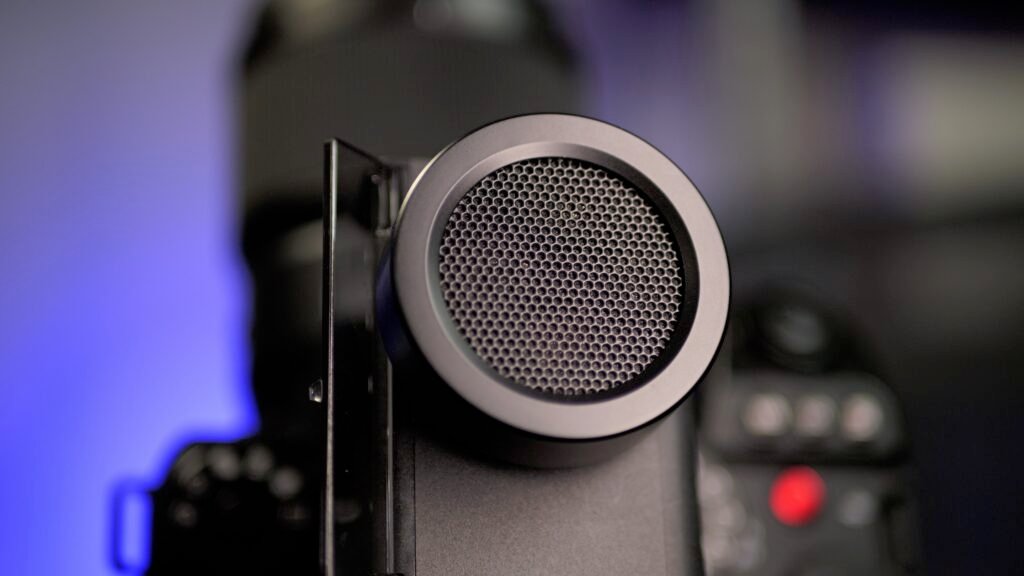
The box includes the DMS1 itself, a wind filter (windsock), and a handy little carry bag.
First Impressions
Due to its unconventional design and naming, I didn’t have super high expectations—but this thing has surprised me. It performs really well and targets a very specific audience: creators who want high-quality ambient room recordings, live shows or concerts, or dynamic atmospheric audio for short films.
Quick Disclaimer
A big thanks to Panasonic for loaning me the DMS1 for this review—I don’t get to keep it, and it’ll head back to them once I’m done. They also loaned the S1IIE, since this new mic is currently only compatible with the latest S1 series cameras (which I don’t own).
The good news: firmware updates will bring support to the S5II and S5IIX soon after launch, followed by the GH7 and G9II. Cameras without 32-bit float recording will still work with the mic, just without the float option. If you’re using something like the original S5, GH6, or GH5II, support is unlikely, which is a shame. And Lumix S9 owners are out of luck entirely—no hot shoe means no compatibility.
Hands-On: Controls and Features Rundown
One of my favorite things? It mounts straight to the hot shoe—no cables, no batteries required. At just 100 grams (3.5 ounces), it’s lightweight enough that you barely notice it on the camera.
The mic array floats on a rubberized shock mount system that does an excellent job minimizing handling noise. Even when using it handheld, I couldn’t detect any rumble or vibration in the recordings.
The improved locking wheel is another win—far more secure than what I’ve seen on Lumix’s XLR adapters. It locks solidly in place and hasn’t glitched once, even during handheld shooting. I hope Panasonic rolls this design out to future audio adapters.
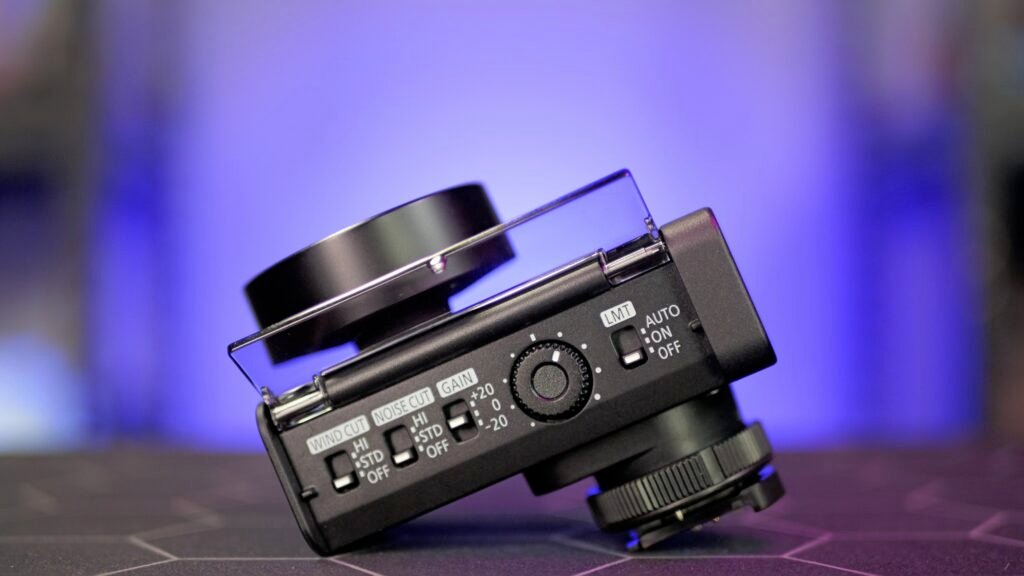
The control layout is straightforward. From left to right:
- Wind cut switch: Pairs nicely with 32-bit float for better isolation on your main source in breezy conditions. That said, the included wind sock performs so well I rarely felt the need to engage it—though it’s handy for extreme weather.
- Noise cut switch: Reduces excessive background noise, plus a +20/-20 dB gain option for heavy adjustments. My advice: Leave the gain at zero and use the dial instead—it’s usually all you’ll need. Keep in mind that 32-bit float mode behaves differently; some controls don’t directly impact levels since the recording is essentially “clip-proof.”
Polar Patterns
On the back, you’ll find six illuminated polar pattern options (they glow blue to show the active one). You can dim the lights via the camera menu if needed. The mic remembers your last setting even after powering the camera off and on—super convenient.
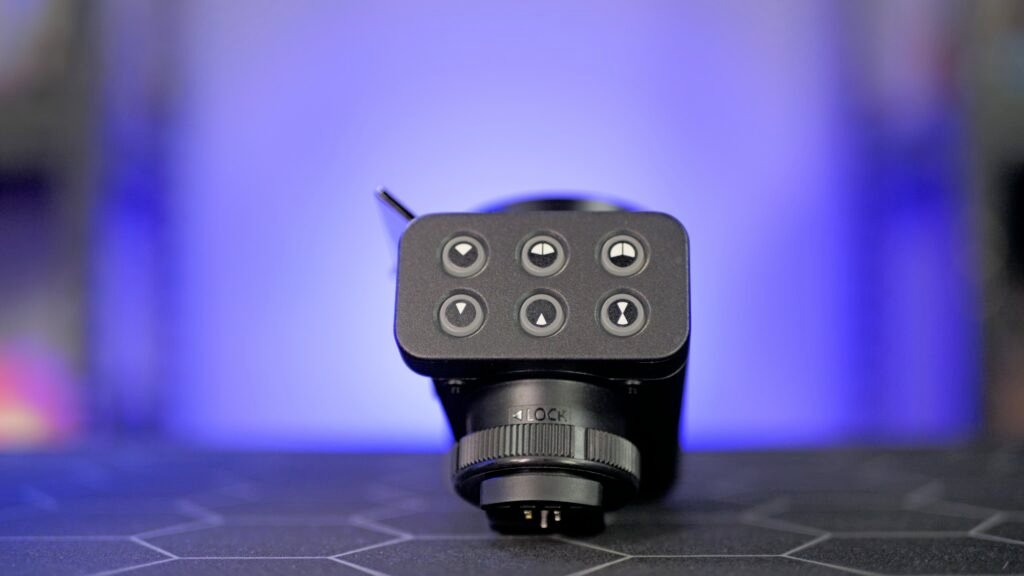
Here’s a practical example of how these polar patterns perform in real-world use (see video above for audio samples)
One note: Switching polar patterns mid-recording causes a brief ~0.1-second audio dropout. This is common across similar switchable-pattern mics I’ve tested (including podcasting ones), so always set your pattern before hitting record for seamless audio.
Backup Recordings and Monitoring
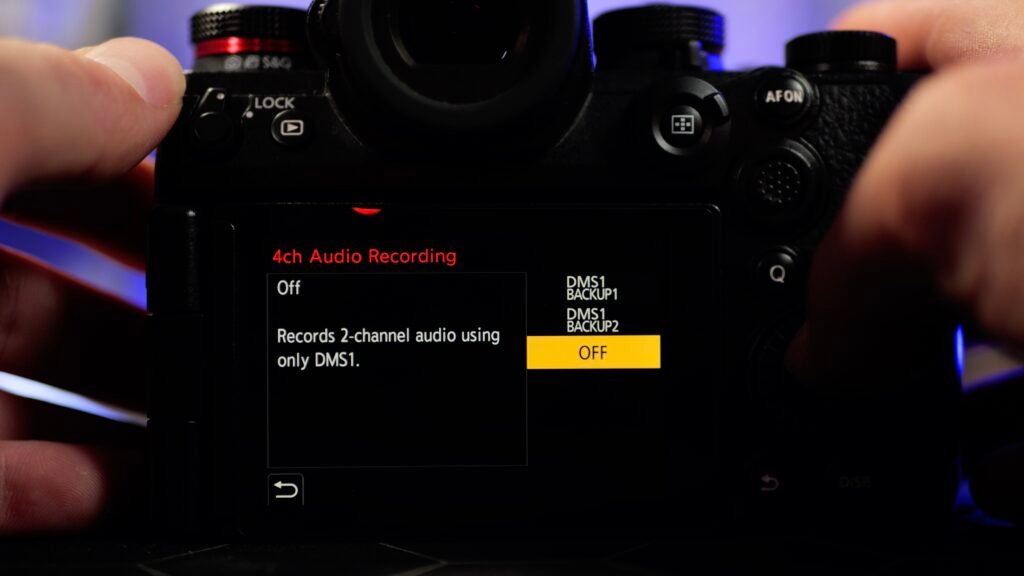
Another standout feature is built-in backup recording, thanks to the four audio channels the compatible cameras support. For instance, in stereo mode, you can record a safety track of the same left/right audio but at -20 dB below the main take—giving you extra headroom in post if anything clips the primary track.
Monitoring works as usual via the camera’s headphone output, and you can select which channels to monitor through the menu.
What This Mic Is (and Isn’t)
The DMS1 is a fantastic, portable, practical on-camera audio solution—but it’s not going to replace a dedicated shotgun mic in a studio setup, since it’s always fixed to the camera. I wouldn’t rely on it as a primary voice mic unless you’re very close to it.
It handles up to 120 dB sound pressure level, which is louder than most live bands, so clipping from high-volume sources isn’t a concern in typical scenarios.
Price, Value, and Comparisons
At $649 AUD, this is undeniably a premium, niche product. You can grab pro field recorders for far less—like the Zoom H1n at around $149 AUD, which offers XY stereo mics, 32-bit float, and even lav mic input (something the DMS1 lacks).
The larger Zoom H4n is still almost $400 cheaper and adds an LCD screen, four channels, and better external mic handling—though you’ll deal with syncing in post, which can be a hassle depending on your workflow and software.
Where the DMS1 shines is seamless integration: more polar pattern options than most standard field recorders, zero syncing required, and direct in-camera recording (especially with 32-bit float on supported bodies). If that’s your priority—plug-and-play high-quality ambient or atmospheric capture—it’s a strong choice.
It won’t replace a versatile studio shotgun like the Rode NTG5 (which costs more but offers different strengths). The DMS1’s audience is narrower: those prioritizing convenience and specific polar flexibility over broad versatility or wireless/lav options. I’d have loved a lav input to leverage 32-bit float more broadly, but that’s the reality.
Final Thoughts
I’m genuinely impressed with the DMS1’s compact size, hot-shoe connectivity, versatile polar patterns, and overall audio quality. That said, the price is steep—especially here in Australia. If you’re shopping internationally, prices may be more reasonable (check current listings in your region via the links I’ll add below).
What do you think of Panasonic’s new on-camera microphone? Drop your thoughts in the comments—I’m curious if this fits your workflow or if the price holds you back. Thanks for reading, and catch you in the next review!
Panasonic LUMIX DMW-DMS1 Specficiations
| Category | Specification | Details/Value |
|---|---|---|
| Microphone Type | Type | 4ch Electret Condenser Microphone Array (Digital Shotgun / Shotgun Stereo) |
| Element | Capsule | 4x Electret Condenser (High-precision 0.4″ / 10mm large-diameter array) |
| Polar Pattern / Directional Modes | Selectable Modes | 6 modes: Forward Directionality Cardioid, Forward Directionality Supercardioid, Rearward Directionality Supercardioid, Bidirectional Supercardioid (Figure-8), Stereo (90°), Wide Stereo (120°) |
| Audio Performance | Frequency Response | 40 Hz to 20 kHz |
| Sensitivity | -12 dBFS (0 dB = 1 V/Pa, 1 kHz) | |
| Maximum SPL | Approx. 122 dB (supports up to ~120 dB with 32-bit float) | |
| Dynamic Range | 105 dB or more | |
| S/N Ratio | 77 dB or more | |
| Recording | Sampling / Bit Depth / Channels | Linear PCM: 48 kHz/24-bit/2ch, 96 kHz/24-bit/2ch (supports 32-bit float recording) |
| Special Features | 32-bit float (distortion-free up to high levels), Backup recording modes, Wind Cut (OFF / STD / HI), Noise Cut (OFF / STD / HI), Gain (-20 dB, 0 dB, +20 dB; fixed at 0 dB in float mode) | |
| Connectivity | Output | Digital via proprietary hot shoe (cable-free; power and audio through Lumix camera hot shoe) |
| Analog Output | No | |
| Power | Source | Powered via camera hot shoe (no batteries required) |
| Physical | Dimensions (H × W × D) | Approx. 1.8 × 2.9 × 2.5″ / 45 × 73.7 × 63.7 mm |
| Weight | Approx. 3.5 oz / 100 g | |
| Other | Additional | Floating internal shockmount (vibration/noise reduction), Advanced wind-noise cancellation (with included windscreen), Pocket-sized design |