Maono PD500W Hybrid Microphone Review: Is This the Ultimate All-in-One Creator Mic?
Published by Shane on November 13, 2026
Finding a single microphone that handles studio podcasting, live streaming, and wireless voice-over work without requiring a table full of adapters usually means compromising on audio quality. After spending two months testing the Maono PD500W Hybrid Microphone (Desk Band Bundle) across daily studio shoots, live streams, and wireless voice-over projects, it has quietly become one of my go-to microphones.
While features like built-in AI noise reduction and wireless connectivity can sometimes feel like gimmicks on paper, Maono has executed them well enough here to rival much more expensive dedicated setups.
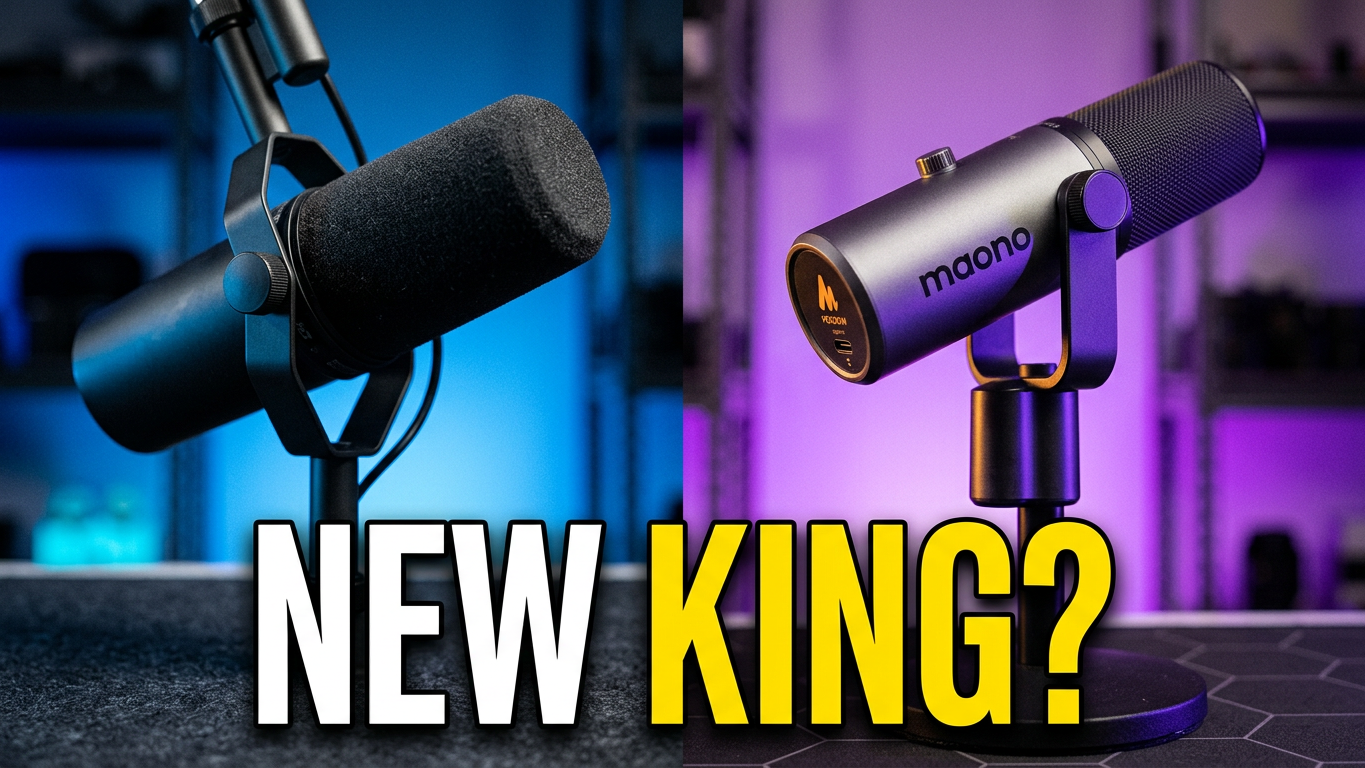
— Watch the full video review above to hear direct, unprocessed audio comparisons between the Maono PD500W (via XLR into a RØDECaster Pro and wirelessly into a MacBook), the Shure SM7B, and the Rode Broadcaster.
Key Specifications & Features at a Glance
Connectivity: XLR, USB-C, and 2.4GHz Wireless (USB-C receiver included; on-camera receiver available separately)
Internal Recording: 32-bit float backup recording (up to 55 hours of onboard storage)
Monitoring: Built-in 3.5mm headphone jack with physical level wheel
Noise Reduction: Multi-stage onboard AI processing (Off, Slight, Moderate, Aggressive, plus App Custom)
Included Accessories: Weighted metal desk stand, XLR cable, USB-C cable, wireless dongle
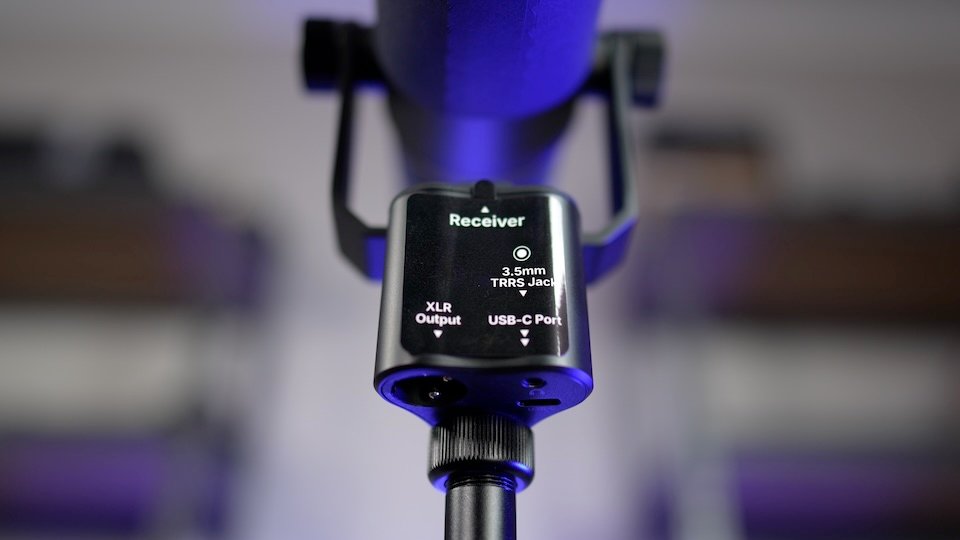
Out of the box, the Desk Band Bundle includes a heavy, weighted metal desk stand that resists tipping if accidentally bumped, along with the necessary XLR and USB-C cables. The bottom of the microphone houses the XLR port, USB-C port, and a 3.5mm headphone monitoring jack.
Maono PD500W3 Outputs
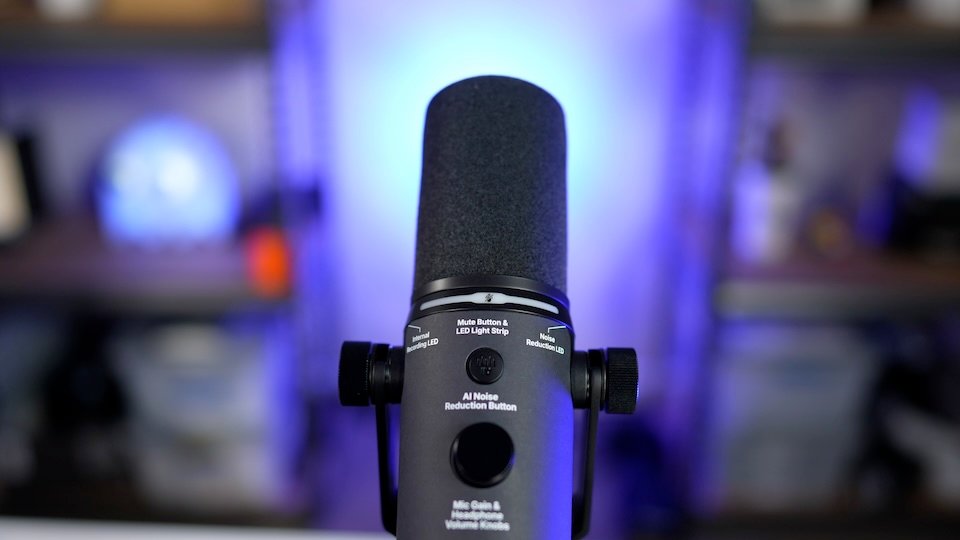
The onboard controls are intuitive and designed for quick adjustments mid-stream:
Multifunction Top Wheel: Turning the wheel adjusts headphone monitoring volume, indicated by an expanding or contracting LED ring. Pressing the wheel inward switches it to gain control mode for wireless and USB-C operation.
Tap-to-Mute: Tapping the top LED instantly mutes the mic and turns the ring red; tap again to unmute.
AI Noise Reduction Button: Cycles through four preset profiles indicated by color—off, slight, moderate, and aggressive—plus an orange custom profile configurable via the Maono app to match your specific room acoustics.
Dedicated Record Button: A single tap starts internal recording; holding it for a few seconds stops the track. A front status LED confirms active recording.
Battery Check: Tapping the power button while the unit is off displays remaining battery life via green, orange, or red LED indicators.
Main Buttons and Dials
Audio Quality & Studio Performance
For a multi-purpose wireless mic, the raw capsule performance is where the PD500W surprises most. Running straight into a RØDECaster Pro with all processing disabled, the tone is smooth and broadcast-ready right out of the box, bearing a strong resemblance to the industry-standard Shure SM7B.
Smooth High End: There is very little harsh sibilance, meaning you won’t need heavy de-essing or corrective EQ in post-production unless you want to shape the tone further.
Off-Axis Rejection: Its directional polar pattern does an impressive job rejecting room reflections and background noise. While it has slightly more pickup play than an SM7B, it held its own next to a Rode Broadcaster during a two-person in-studio guest shoot without noticeable mic bleed.
Plosives & Proximity Effect: Thanks to the recessed diaphragm and internal pop filter, plosives are well-controlled even when working close to the grille. Moving in closer yields a rich, warm proximity effect ideal for voice-over and radio-style broadcasts. If you do get too close, it can give you plosives, but for regular use, it’s not an issue.
Wireless Workflow & 32-Bit Float Safety Net
Cutting the XLR cable during a live stream completely declutters a desk setup, and the wireless transmission to a MacBook maintains remarkably consistent audio fidelity. At launch, Maono is also offering an on-camera wireless receiver, which removes the usual headache of needing bulky XLR-to-3.5mm adapters just to run a broadcast dynamic mic straight into a mirrorless camera.
The standout feature, however, is internal 32-bit float recording with up to 55 hours of onboard storage.
If you aren’t familiar with 32-bit float audio, it effectively eliminates digital clipping. If you suddenly shout during a live stream or laugh loudly into the capsule and peak your main track, you can pull the audio levels down in your video editor using the internal backup file with zero distortion. Even if you run the mic wired via XLR in a controlled studio, having a dedicated 32-bit float safety recording running at the touch of a button provides genuine peace of mind.
Pros & Cons
What I Like
Broadcast-grade vocal tone with smooth high frequencies and minimal sibilance
True hybrid versatility (XLR, USB-C, and reliable wireless)
Effective off-axis rejection and built-in plosive protection
Practical physical controls, including tap-to-mute and visual LED metering
What Could Be Better
Desk Stand Handling Noise: The included weighted stand transfers desk bumps and arm movements into the audio if AI noise reduction is turned off. Mounting the mic on a boom arm like the Rode PSA-1 solves this completely.
XLR Connector Durability: The XLR jack on the base isn’t as rugged as what you’ll find on legacy Shure or Rode microphones—mine has already developed a slight dent from regular cable swaps.
Headphone Monitoring Latency: Monitoring directly from the mic’s headphone jack introduces a slight delay (a few frames behind) compared to zero-latency monitoring through a dedicated interface like the RØDECaster Pro.
Lightning iPhone Compatibility: There is no USB-C to Lightning adapter in the box, so creators using older Lightning-based iPhones will need an adapter to customize the AI settings in the mobile app.
Shane & Maono PD500W
Final Verdict
At $459 USD (or $429 USD with a creator discount), the Maono PD500W isn’t an impulse buy—but if you currently juggle separate microphones for desk streaming, voice-overs, and on-the-go recording, it easily justifies the investment by consolidating your gear.
The closest comparison in my studio is the Rode NT1 5th Generation, which also bridges traditional studio connectivity with 32-bit float recording. However, by adding wireless capability, onboard AI noise reduction, and standalone internal storage, the Maono PD500W is a far more complete all-in-one package. Minor build and latency quirks aside, it is one of the most capable hybrid microphones available for content creators right now.